How to Design Counter-Drone Protection for Prisons
Design prison counter-drone protection using RF, radar, EO/IR, zoning, controller finding, evidence, staff workflow and lawful response planning.
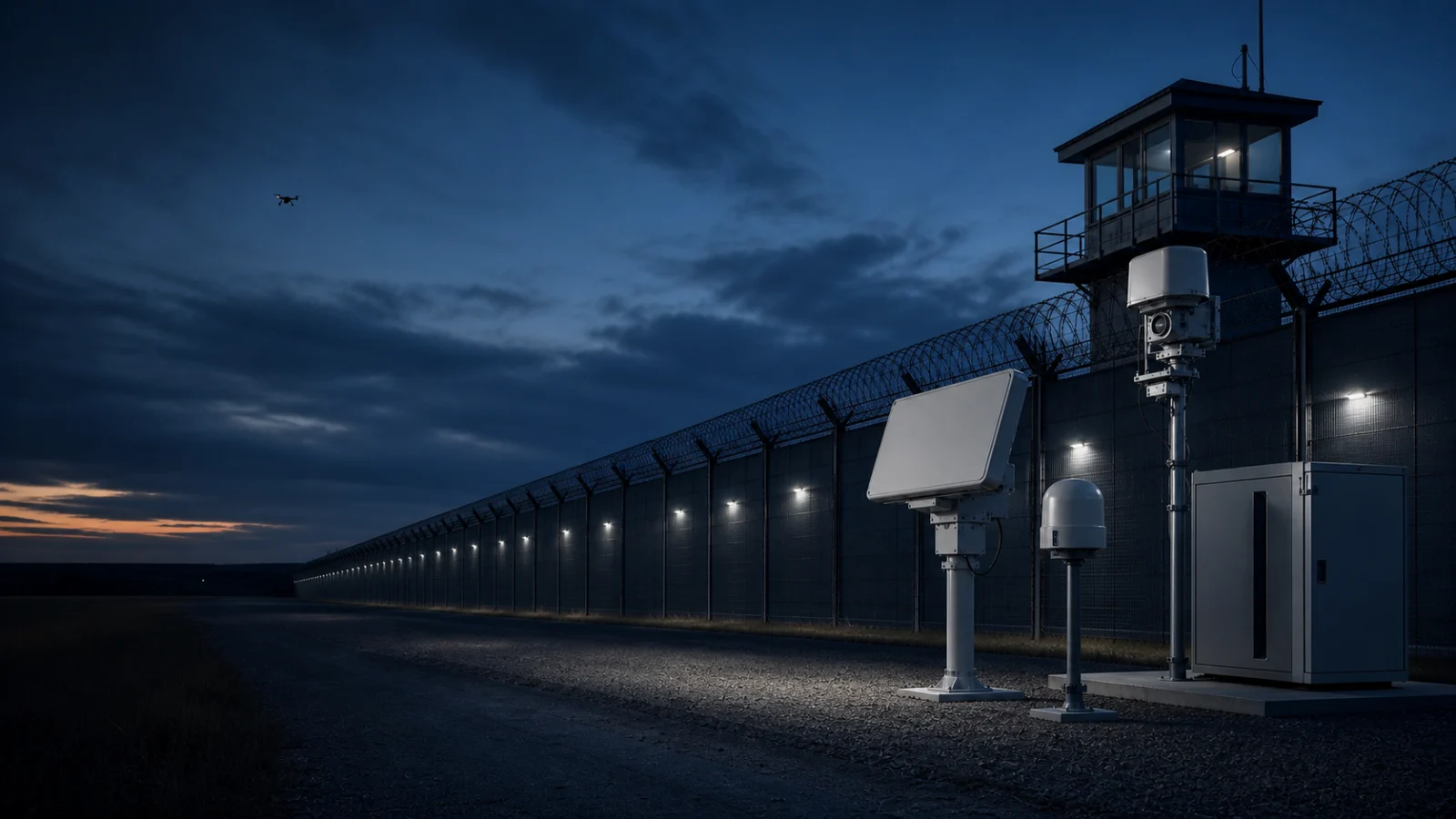
Plan detection, verification, evidence and lawful response for prisons and secure compounds facing low-altitude contraband deliveries. Counter-drone protection for a prison or secure compound must focus on the complete contraband-delivery event: approach, boundary crossing, drop location, possible controller area, staff response and evidence. A sensor that detects an aircraft but cannot direct staff to the event location may not reduce the operational risk. The system therefore needs site-specific coverage, fast verification, clear zoning and a lawful response workflow. Active RF countermeasures are restricted in many jurisdictions. Detection, tracking, identification, evidence and coordinated ground response should provide value even where mitigation is not authorized. What makes the prison threat model different? Likely flights may be short, low and launched near the perimeter. Targets can approach over walls, roofs, roads or adjacent property and release a small payload within seconds. Activity may occur at night or during low staffing. The aircraft may be a commercial drone, an FPV platform or an autonomous route. Map previous incidents, attractive drop zones, blind corners, exercise yards, roofs, windows, access roads and likely retrieval routes. Include the controller or accomplice on the ground as part of the event model. Which areas should receive priority coverage? Prioritize zones by consequence and response time. Inner yards, accommodation blocks, workshops, medical areas, high-security wings and known collection points may require immediate alarms. Outer approaches provide early warning and potential controller direction, while public roads may require a different threshold to avoid unnecessary escalation. Use nested zones: observation, warning, protected boundary and critical drop zones. A stable track moving toward the inner area is more actionable than an isolated distant detection. Which sensors are useful around walls and buildings? Passive RF can detect supported control or video links and may provide controller bearings. Radar adds physical detection for unknown or silent targets but must handle walls, fences, vehicles, birds and ground clutter. EO/IR supports visual verification and can help locate a payload or person after a drop. Remote ID assists with compliant aircraft but is not complete coverage. Buildings and walls create RF an…