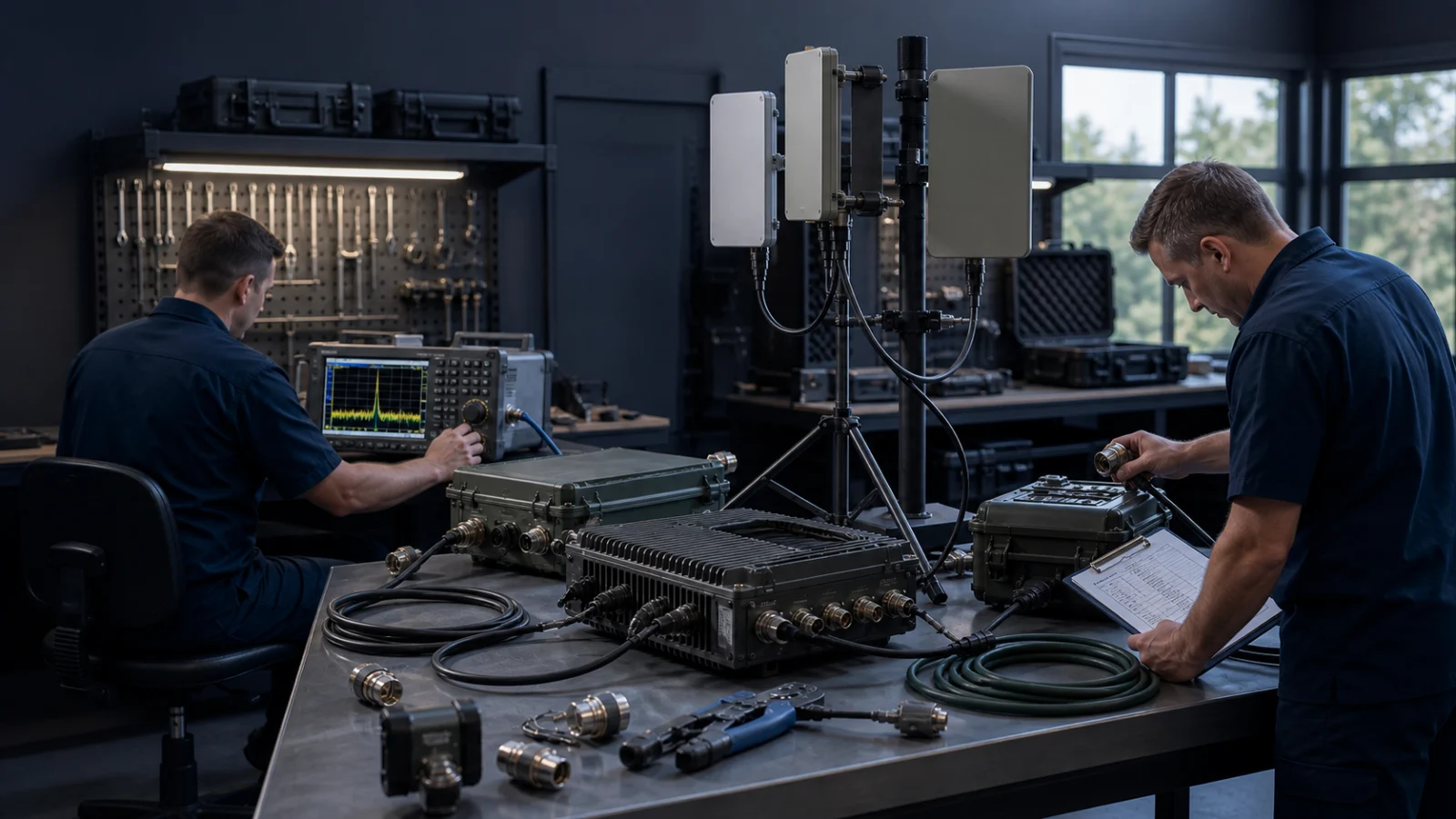
Counter-UAS FAT and SAT: A Practical Acceptance Guide
Plan counter-UAS FAT and SAT for hardware, software, coverage, false alarms, fusion, operator workflow, documentation and lawful mitigation.
Define factory and site acceptance tests for detection, tracking, identification, integration, logging and authorized response functions. Factory Acceptance Testing (FAT) confirms that a counter-UAS system is built, configured and integrated as specified before shipment. Site Acceptance Testing (SAT) confirms that the installed system performs in the customer's real environment. The two tests are complementary: FAT catches configuration and manufacturing problems under controlled conditions, while SAT validates coverage, interfaces, workflow and environmental performance after installation. A successful acceptance program begins before the purchase order. Requirements must define targets, conditions, metrics, evidence and pass criteria so the parties do not debate the meaning of “detected” after the equipment arrives. What should be agreed before FAT begins? Freeze the tested bill of materials, hardware revisions, firmware, software, licenses and configuration. Link every test to a contract requirement and identify the measurement method, instrument, calibration status, sample size and pass rule. Define how defects are classified, corrected and retested. Specify which evidence the supplier must provide, including screenshots, raw logs, configuration exports, serial-number records and signed test sheets. Demonstration is not acceptance unless the result is measurable and retained. Which hardware checks belong in FAT? Verify model and serial numbers, connectors, cables, antennas, mechanical finish, labeling, grounding points, power input, protective devices and accessories. Inspect workmanship and compare the as-built configuration with drawings. For RF power equipment, measure frequency, output definition, harmonics, spurious emissions, reflected-power protection, telemetry and thermal behavior under the agreed duty cycle. For receivers, confirm frequency coverage, channel health and known-signal response. For cameras and radar, exercise movement, initialization, built-in tests and interfaces. How should software and interfaces be tested at FAT? Test user roles, authentication, sensor status, alarms, maps, time synchronization, event recording, replay, export, backups and recovery. Verify every required interface with representative messages, including invalid, delayed and missing data. Confirm that units, coordinates, timestamps, confidence values and so…