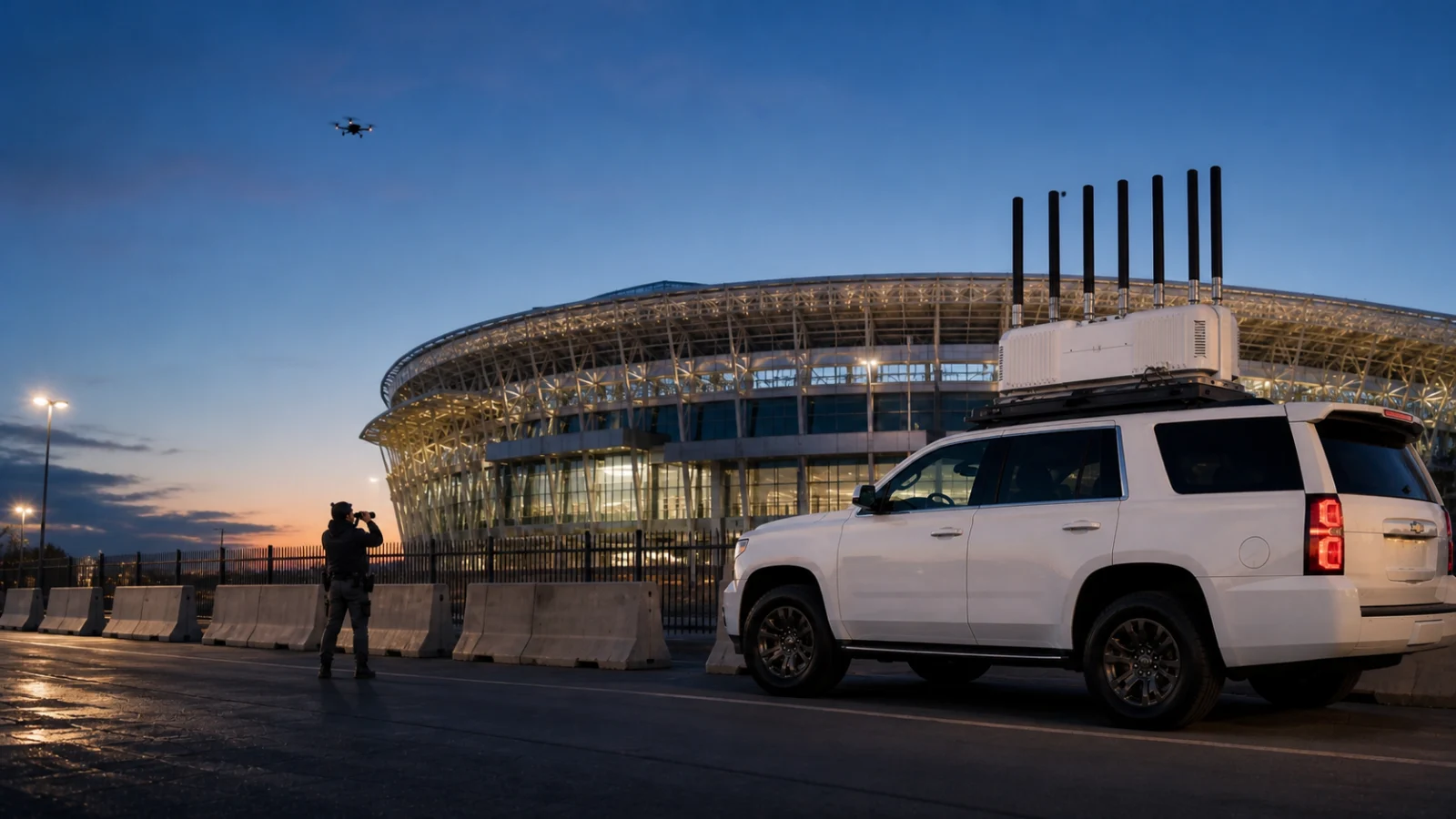
FPV Drone Detection and Countermeasure Challenges
Understand FPV drone detection challenges including low flight, link diversity, analog video, short response time, radar limits and acceptance tests.
Why FPV targets are difficult to detect and respond to, and how frequency diversity, low-altitude flight and rapid timelines affect system design. FPV drones are difficult counter-UAS targets because they can be small, fast, low, inexpensive and built from components that do not present one consistent protocol or radio profile. Some use analog video, others digital links, lower-frequency control, frequency hopping or custom configurations. They may fly close to terrain and structures, leaving little warning time. A system designed only around common commercial-drone identifiers can therefore have significant FPV blind spots. Effective planning begins with representative target sets and real flight profiles, then combines RF awareness, physical detection, visual confirmation and a response workflow appropriate to the site's legal authority. Why are FPV targets different from common commercial drones? Many commercial platforms use integrated manufacturer ecosystems with recognizable control, telemetry and Remote ID behavior. FPV aircraft can combine a frame, flight controller, receiver, video transmitter, camera and antenna from different vendors. Firmware and frequency settings may be changed by the user. This diversity makes a model-count claim less useful. Buyers should ask which signal families, frequency ranges and unknown-signal methods are supported, and how the system behaves when it cannot identify a protocol. How does low-altitude flight affect detection? FPV pilots may follow roads, walls, trees or terrain. Low flight shortens radar and camera sight lines, increases ground clutter and creates intermittent RF visibility. A sensor with a long open-field range may see the target only briefly at a complex site. Coverage design should model likely corridors and terrain masking, not only circular radius. Distributed sensors, elevated positions and overlapping sectors can reduce blind spots, but installation geometry must be validated with representative flights. Which RF links may be present? An FPV system can include a control link, video downlink, telemetry and optional navigation or cellular equipment. Common activity may occur around 2.4 GHz and 5.8 GHz, while some control or telemetry systems use region-dependent sub-GHz bands. Analog video and digital links have different bandwidth, timing and classification features. Frequency lists must be con…