Anti-Drone Jammer Types: Portable vs Backpack vs Fixed
Compare portable, backpack, vehicle and fixed anti-drone jammer types by range factors, mobility, power, duty cycle, antennas, integration and legal use.
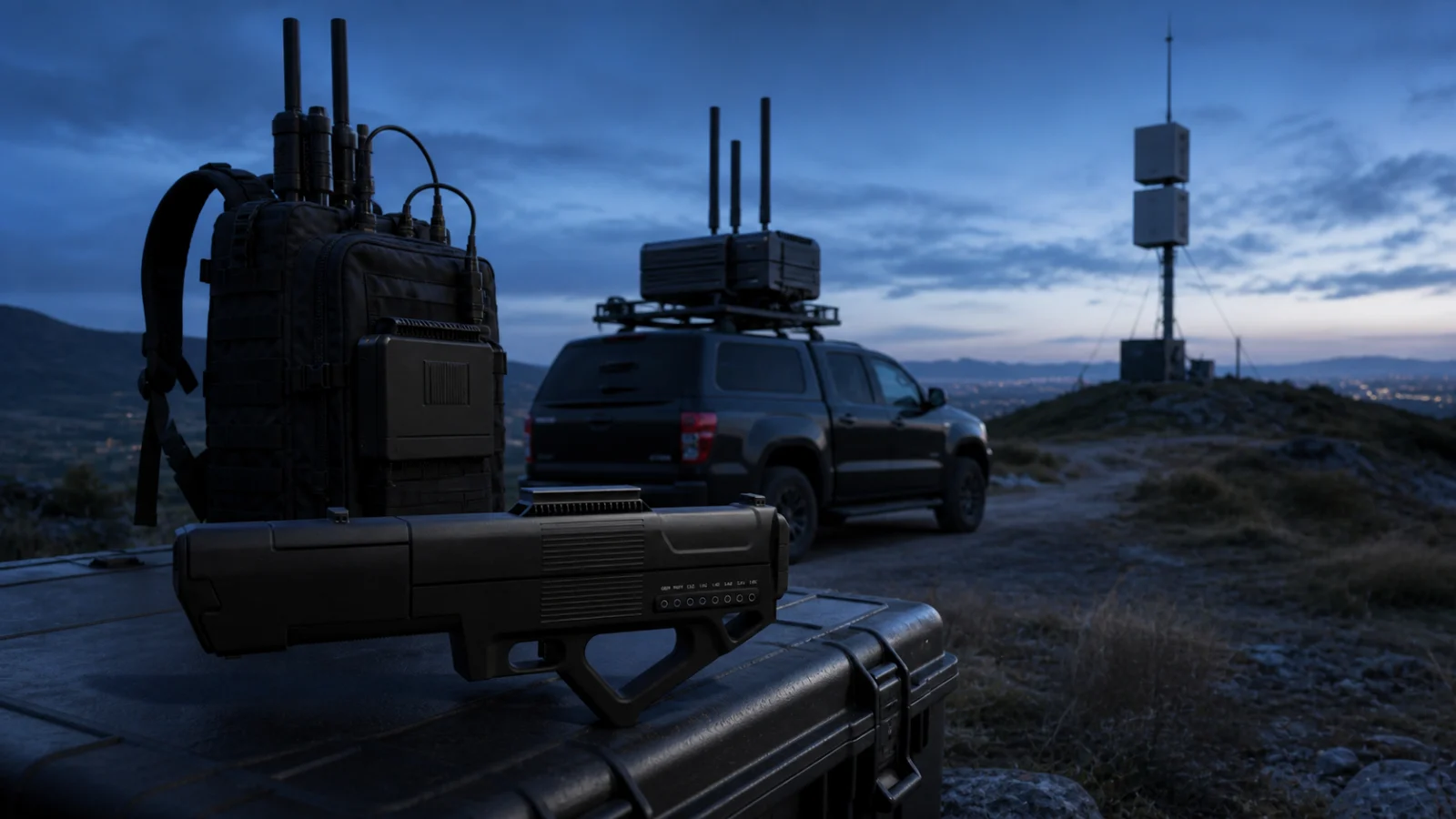
Compare portable, backpack, vehicle-mounted and fixed anti-drone jammer types by mobility, duty cycle, coverage, integration and buyer requirements. Anti-drone jammers are available in portable, backpack, vehicle-mounted and fixed-site formats. They may use similar RF countermeasure principles, but they are not interchangeable: each format makes a different trade-off between mobility, output, antenna pattern, battery endurance, cooling, operator workload and system integration. **Quick recommendation:** choose a portable jammer for short, operator-directed response; a backpack jammer for mobile patrols requiring more endurance; a vehicle-mounted jammer for high-power mobile coverage; and a fixed jammer for continuous protection of a defined site. Always verify legal authority, frequency configuration and electromagnetic compatibility before operation. Anti-drone jammer types compared Type Best suited to Main advantage Main trade-off Portable / handheld Rapid point response and mobile teams Light, fast and directional Operator aiming and limited battery/duty cycle Backpack Patrols and extended dismounted operation More bands and endurance while mobile Higher carried weight and heat management Vehicle-mounted Convoys, patrol vehicles and temporary zones Mobile power, antennas and cooling Installation and vehicle integration required Fixed-site Perimeters and critical infrastructure Continuous remote operation and integration Site design, coverage planning and permissions What does an anti-drone jammer do? An anti-drone jammer transmits controlled RF energy intended to interfere with selected command, video, telemetry or navigation links. The actual result depends on the drone, signal, autonomy, configured frequencies and operating environment. Possible aircraft behaviors are manufacturer- and configuration-dependent; buyers should never assume every drone will land or return home in the same way. Jamming is an active countermeasure, not a detection method. A professional workflow normally detects and verifies a target before an authorized operator activates mitigation. The [U.S. Interagency Legal Advisory on UAS Detection and Mitigation Technologies](https://www.justice.gov/d9/interagencylegaladvisoryonuasdetectionandmitigationtechnologies_1.pdf) explains that legal authority varies by technology and user; in many countries…