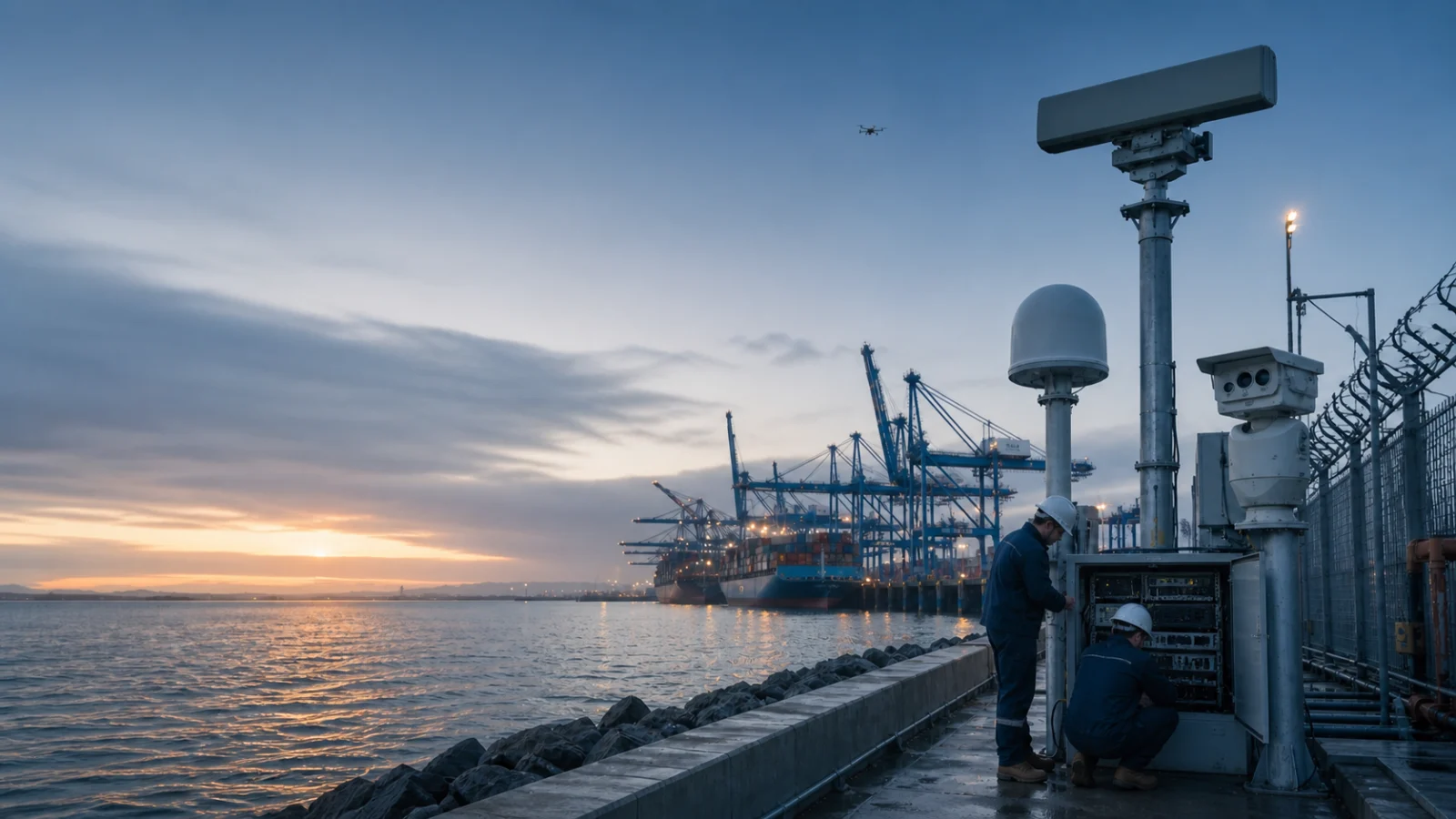
Counter-UAS System Cost: A Total Cost of Ownership Guide
Build a counter-UAS total cost of ownership model covering survey, sensors, infrastructure, integration, testing, licenses, maintenance and support.
Build a realistic counter-UAS budget covering survey, sensors, integration, infrastructure, training, licenses, testing and lifecycle support. The cost of a counter-UAS system is not the sum of sensor prices. A realistic budget includes site survey, engineering, mounting, power, networks, command software, integration, cybersecurity, training, acceptance testing, maintenance, licenses, spare parts and future retesting. A low equipment quote can become the expensive option when it creates blind spots, excessive false alarms or unsupported interfaces. Total cost of ownership (TCO) compares alternatives over an agreed operating period and links spending to measurable coverage and workflow outcomes. It also exposes assumptions that should be resolved before procurement. Why are public counter-UAS prices rarely comparable? Counter-UAS projects differ in protected area, target set, terrain, sensor mix, redundancy, legal authority, installation standard and integration scope. A quoted “system” may mean one detector, while another includes several sites, cameras, command software, training and support. Prices also depend on whether infrastructure already exists and whether the project requires hazardous-area work, towers, fiber, environmental enclosures or custom interfaces. Buyers should compare a normalized scope, not headline totals. Which cost categories belong in the initial project budget? Start with a work breakdown structure: Cost group Typical scope Survey and design Threat workshop, site survey, RF survey, coverage and network design Detection equipment RF, radar, Remote ID, EO/IR and supporting sensors Command platform Servers, storage, software, operator consoles and licenses Installation Mounts, towers, cabinets, cable, grounding, lightning and civil work Integration Sensor APIs, maps, access control, dispatch, video and cybersecurity Testing and delivery FAT, SAT, controlled flights, documentation and training Spares and support Replacement units, tools, warranty and response service Require suppliers to state exclusions, customer-provided items, quantities and assumptions for each group. How does the threat model affect cost? A site that only needs awareness of common compliant commercial drones may use fewer sensor layers than a site that must detect radio-silent, custom FPV and multiple simultaneous targets. Required war…