Drone Detection Radar vs RF Detection: Which Is Better?
Compare drone detection radar vs RF detection: how each works, targets detected, limitations, tracking, false alarms and when to combine both sensors.
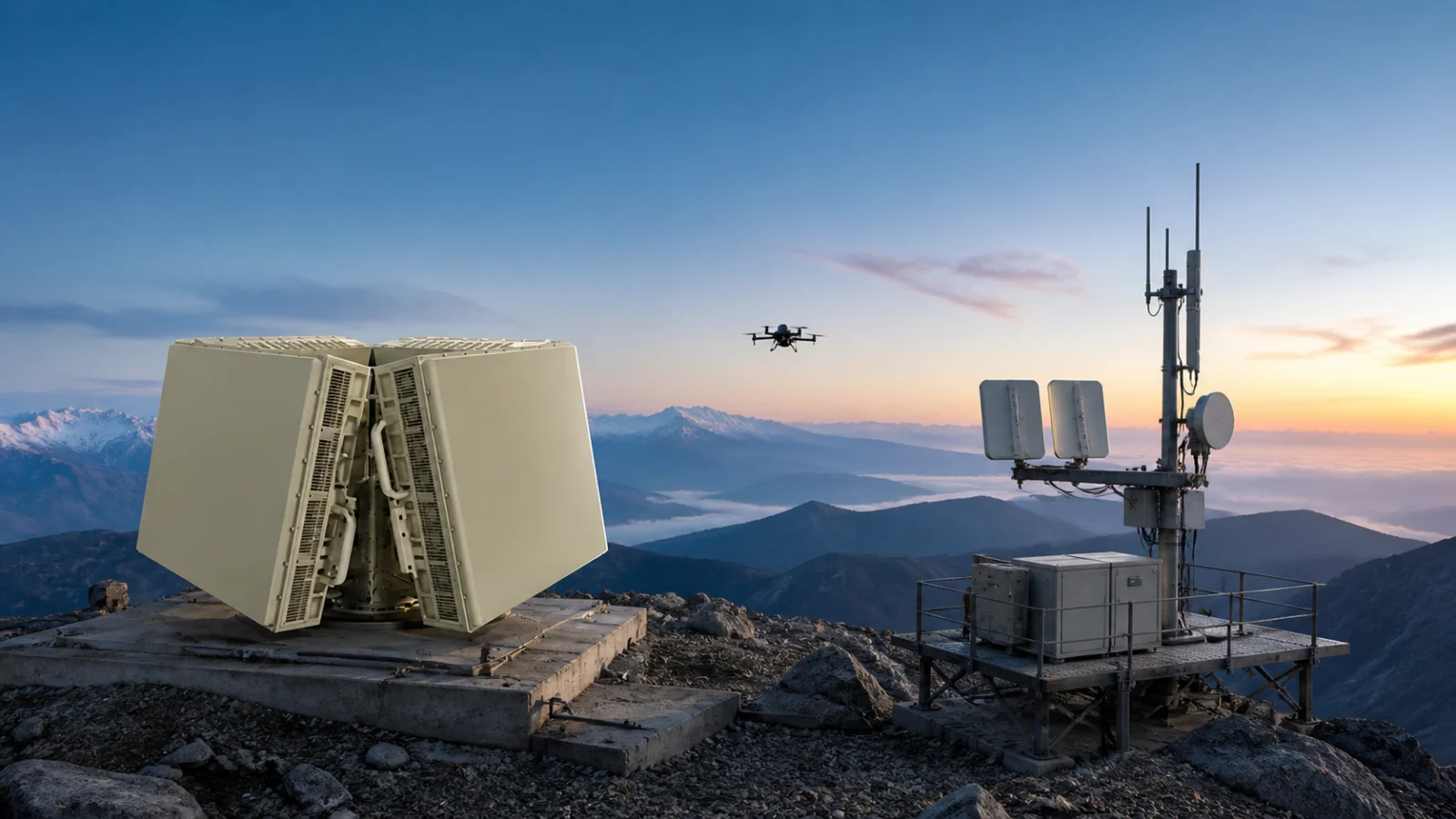
Compare drone detection radar and RF detection by target coverage, identification, tracking, false alarms, deployment and total system role. Drone detection radar and RF detection solve different parts of the counter-UAS problem. Radar looks for a physical object by analyzing reflected energy. An RF drone detector listens for radio activity associated with control, telemetry, video or identification signals. **The short answer:** RF detection is often the best passive first layer for common transmitting drones; radar is stronger when the site must detect a physical target regardless of whether it emits a recognizable signal. For critical sites, radar plus RF plus EO/IR verification is usually more resilient than choosing only one sensor. Radar vs RF drone detection at a glance Question RF drone detection Drone detection radar What does it sense? Radio emissions and protocols Physical target and motion Does the drone need to transmit? Usually yes No Is the sensor passive? Yes No, radar transmits and receives Can it identify a protocol or controller? Sometimes, when signals are recognized Not by itself Can it track range and position? Depends on architecture Usually a core capability Main challenge RF-silent, autonomous or unfamiliar links Clutter, small radar cross-section and siting How RF drone detection works An RF detector monitors selected frequency ranges and looks for energy, signal features or known protocols associated with drones and controllers. Depending on the system, it may report a likely drone family, channel, direction of arrival or estimated locations. RF sensing is passive, so it does not add RF energy to the environment. It can provide an early cue before a drone is visible, and protocol-aware systems may offer identification context that radar cannot. Direction-finding networks can also help estimate the bearing or location of the aircraft or controller. Where RF detection performs well busy sites that need passive, continuous monitoring; common remote-controlled drones using recognizable links; missions where protocol or controller context improves assessment; portable or fixed deployments that need rapid installation; cueing an EO/IR camera toward a likely sector. RF detection limitations An RF detector cannot assume every aircraft will transmit a known signal. Autonomous waypoint flights, un…